Quick question before you read on: which is higher value, a shiny red supermarket tomato or a can of whole peeled San Marzanos?
Most people pick fresh. Most of the time, they’d be wrong. Here’s the reality check.
1. The “fresh” tomato is often a marketing trick
Unless it’s a cherry tomato, that big “fresh” tomato at the supermarket was most likely picked hard and green, at what the industry calls the mature green stage. It’s shipped in climate-controlled trucks, then exposed to ethylene gas in ripening rooms so it turns red before it hits the shelf.
What about “vine-ripened”? That’s a loophole. A vine-ripened tomato only has to reach the breaker stage, the first blush of pink or yellow at its base, before it’s picked. It still finishes turning red in a box, not in the sun.
The canned reality: Canned tomatoes are picked at peak summer ripeness and sealed within hours. In a real sense, they’re fresher than much of the produce aisle.
Canned tomatoes are picked at peak ripeness and sealed within hours. Often they’re fresher than the produce aisle.
2. Canned can beat raw on nutrition
- Lycopene: Heat processing breaks down the tomato’s cell walls, making the antioxidant lycopene significantly more available to your body. Some estimates put it at up to four times more than raw.
- The skins: Tomato skins and seeds carry lectins, which some people find hard on digestion. Whole peeled canned tomatoes remove the skin entirely.
3. The cost (and the metal taste)
A 28 oz can of high-quality whole peeled tomatoes runs about $3–4. The same weight in peak-ripe heirlooms can easily cost $10+.
Worried about a metallic taste? Look for BPA-free cans (most are today) and true San Marzano or Italian imports. They’re naturally sweeter with no metallic aftertaste.
4. The High Value verdict: canned wins… but I buy both
The science says canned wins. Real life says you need both.
- Use canned for: pasta sauces, braised meats, stews, chili, pizza sauce.
- Use fresh for: sandwiches, burgers, fresh salsa, guacamole, salads. You can’t put a canned tomato on a burger.
Build your kitchen around reality, not perfection.
5. Does better taste mean better nutrition?
Not always. In whole foods, flavor signals chemical density, but it doesn’t tell you how your body will respond. A tomato that tastes complex and sweet was usually allowed to ripen longer and build more flavor compounds. One that tastes like wet cardboard usually didn’t.
But taste has blind spots:
- Sweetness signals energy (sugar), not necessarily vitamins. Modern fruit is often bred for sweetness.
- Great taste doesn’t cancel anti-nutrients like lectins or oxalates for people sensitive to them.
- Bitterness can be a warning sign in nature, but it’s also the flavor of many antioxidants: the peppery bite of good olive oil, arugula, black tea.
The HVC rule: In whole foods, flavor signals chemical density. The High Value Score weighs the consequence.
6. The High Value tomato hierarchy
- Tier 1 · The peakLocal farmers’ market tomatoes (late summer)Picked at full ripeness, travels miles not thousands of miles.
- Tier 2 · Premium supermarketKumatos & seasonal heirloomsRipen well without being picked green.
- Tier 3 · Everyday MVPCherry & grape (e.g., Sungold)Tough skins let them ripen longer on the vine.
- Tier 4 · Mid-gradeCampari / greenhouse clusterGrown in greenhouses, shipped on the vine.
- Tier 5 · Skip itBig, pale loose slicers in winterPicked green, gas-ripened, flavorless.
7. The highest value tomatoes, by name
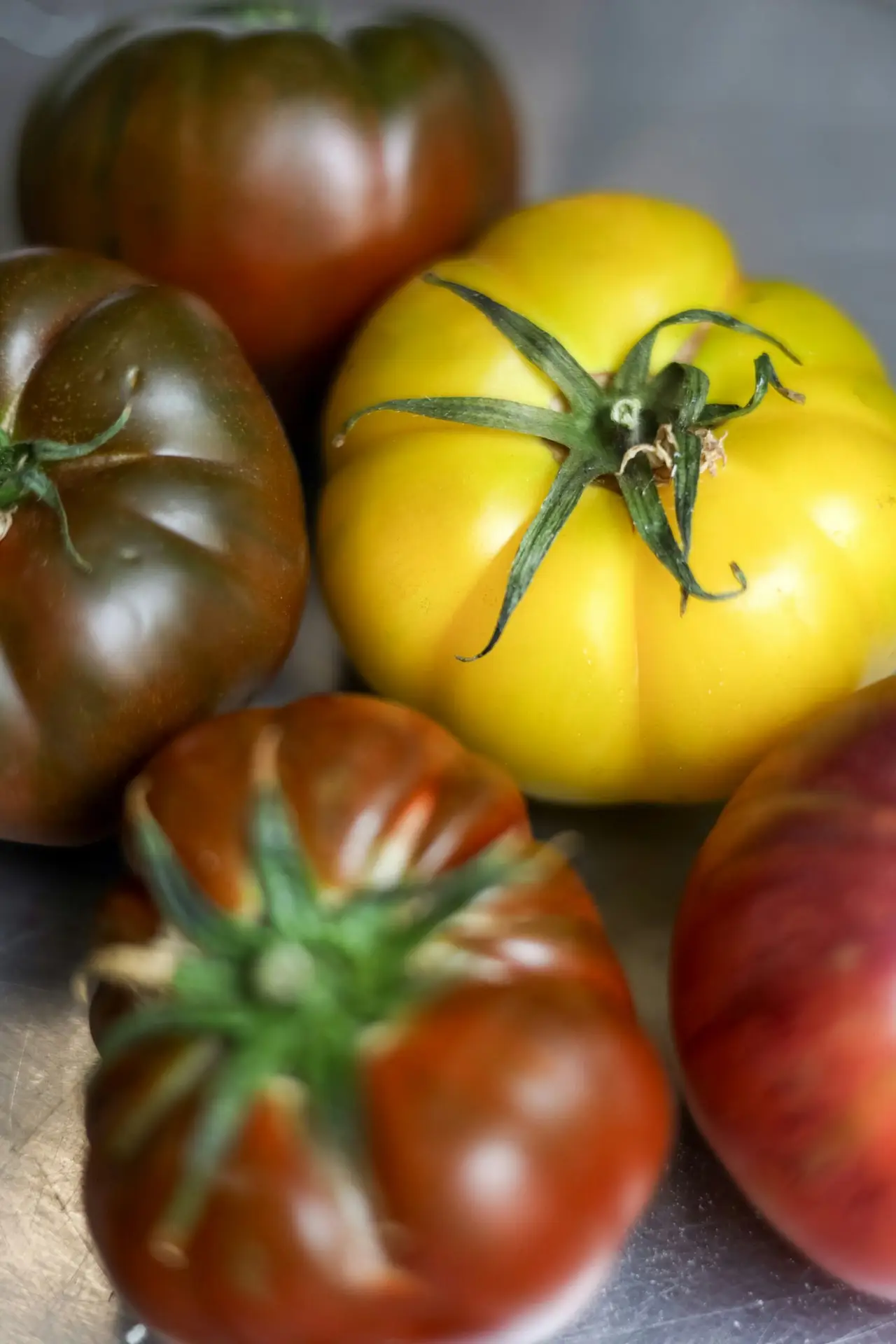
- Cherokee Purple & Black Krim (heirloom): Late-summer farmers’ market royalty. Deep mahogany color, smoky, complex flavor. Best raw with good olive oil and sea salt.
- Dry-farmed Early Girl: Farmers cut off water after the plant flowers, forcing roots deep. The result is a smaller, denser fruit with concentrated flavor.
- Norfolk Purple: A bioengineered tomato using genes from the snapdragon flower, purple all the way through and loaded with anthocyanins (the antioxidants in blueberries). Mostly available as seeds for home gardeners for now.
- Indigo Rose: One of the darkest open-pollinated tomatoes; its skin turns nearly black in the sun.
- Kumato: A naturally cross-bred brown tomato. Its color comes from chlorophyll that doesn’t fully break down, mixed with red lycopene. It ripens well without being picked green: lower acidity, consistent flavor.
- Sungold cherry: The everyday supermarket MVP. Sweet, tough-skinned, ripens longer on the vine. Halve for salads or blister whole with garlic.
- Datterino: A small Italian plum tomato with a high skin-to-flesh ratio, where much of the lycopene lives.
- Canned San Marzano (DOP): The ultimate cooking tomato. Grown in volcanic soil near Mount Vesuvius, with thick flesh, few seeds and low water, so sauce thickens without hours of simmering.
- Crimson Plum: Can’t find canned San Marzanos? This firm, meaty Roma-style tomato is your best fresh sauce option.
- Campari: The winter bridge. When you need a fresh slice for a sandwich in January, skip the pale slicers and grab these.
8. Can you trust the farmers’ market?
Mostly, but verify. Some vendors buy wholesale produce and resell it under a tent.
In California, real markets are Certified Farmers’ Markets (CFMs). To sell produce in the certified section, a farmer needs a Certified Producer Certificate, issued after the county Agricultural Commissioner inspects the farm. They can only sell what they grew (or, in limited cases, produce from up to two other certified farms, clearly labeled), and they must display the certificate at their booth.
Where resellers slip through:
- The non-certified “vendor” section (crafts, baked goods, prepared food)
- Unregulated parking-lot “markets” with no agricultural oversight
- Vague labeling under the multi-farm rule
Trust but verify
- Certificate: Is the embossed certificate displayed, and does the farm name match the banner?
- Box check: Battered farm crates and totes = real. Pristine branded boxes stamped with “Product of…” = wholesale.
- Seasonality: Piles of bright red tomatoes in February? Reseller.
- Uniformity: Perfectly identical, waxed, shiny produce = commercial.
3 questions that expose a reseller
- “What variety is this?” A farmer says “Cherokee Purple” or “Sungold.” A reseller says “heirloom.”
- “What are you using for pest control this season?” A farmer names the pest and the fix. A reseller says “it’s all natural.”
- “When did you pick these?” A farmer says “Tuesday, 5 AM, before the heat.” A reseller says “a couple days ago.”
Ask casually while you shop. Find the two or three farmers who give you the nerdy answers, and that’s your farm.
The bottom line
Fresh isn’t automatically better. Canned isn’t a compromise. High value is knowing which one fits the dish in front of you.
This article is for general cooking and food-education purposes and is not medical advice.